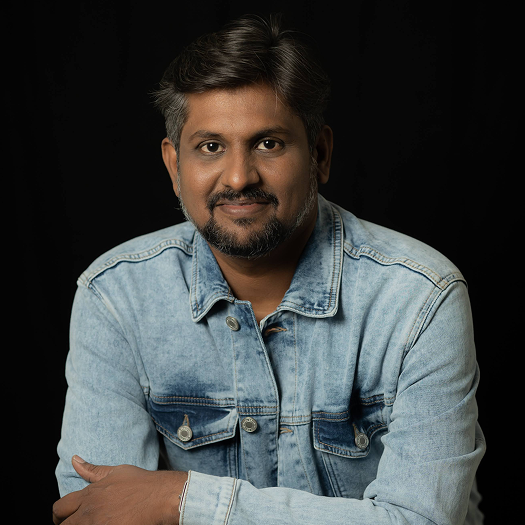
Hi, I'm Shanmugam.
Most of what I design lives in the parts of a product that never show up in a screenshot — permission models, edge cases, the workflow that breaks the moment two teams disagree about ownership. I've spent my career there, turning complexity into something a person can actually use without a manual.
The work I find most interesting rarely starts with a screen. It starts with a question nobody has fully answered — the kind that only gets solved through research, a few wrong turns, and close collaboration with the people who'll live with the result.
The system comes before the screen
Most of the friction people feel in a product didn't start on the screen — it started upstream, in how data flows, how permissions are structured, or how two teams handed work off to each other. Before I open a design tool, I try to understand that system well enough to know which problems a screen can actually fix, and which ones it's just going to paper over.
AI changes the calculus without changing the fundamentals. An interface built on a model that's occasionally wrong needs different guardrails than one built on deterministic logic — it needs to show its reasoning, admit uncertainty, and give people an easy way to correct it. I care less about what a feature can technically do and more about whether it earns a place in someone's workflow. Most products don't need another feature; they need the ones they have to work properly.
None of this happens alone. The solutions I'm proudest of came from sitting with the people who use the product, watching where they hesitate, and building alongside engineers and PMs who caught things I would have missed. Design, in my experience, is less about having the right answer and more about creating the conditions where the right answer can surface.
Skills & Tools
Design
- Enterprise UX
- Service Design
- Systems Thinking
- Design Systems
AI & Research
- AI Interaction Design
- User Research
- Usability Testing
- Journey Mapping
Tools
- Figma
- FigJam
- Notion
- Maze
108 temples. One book.
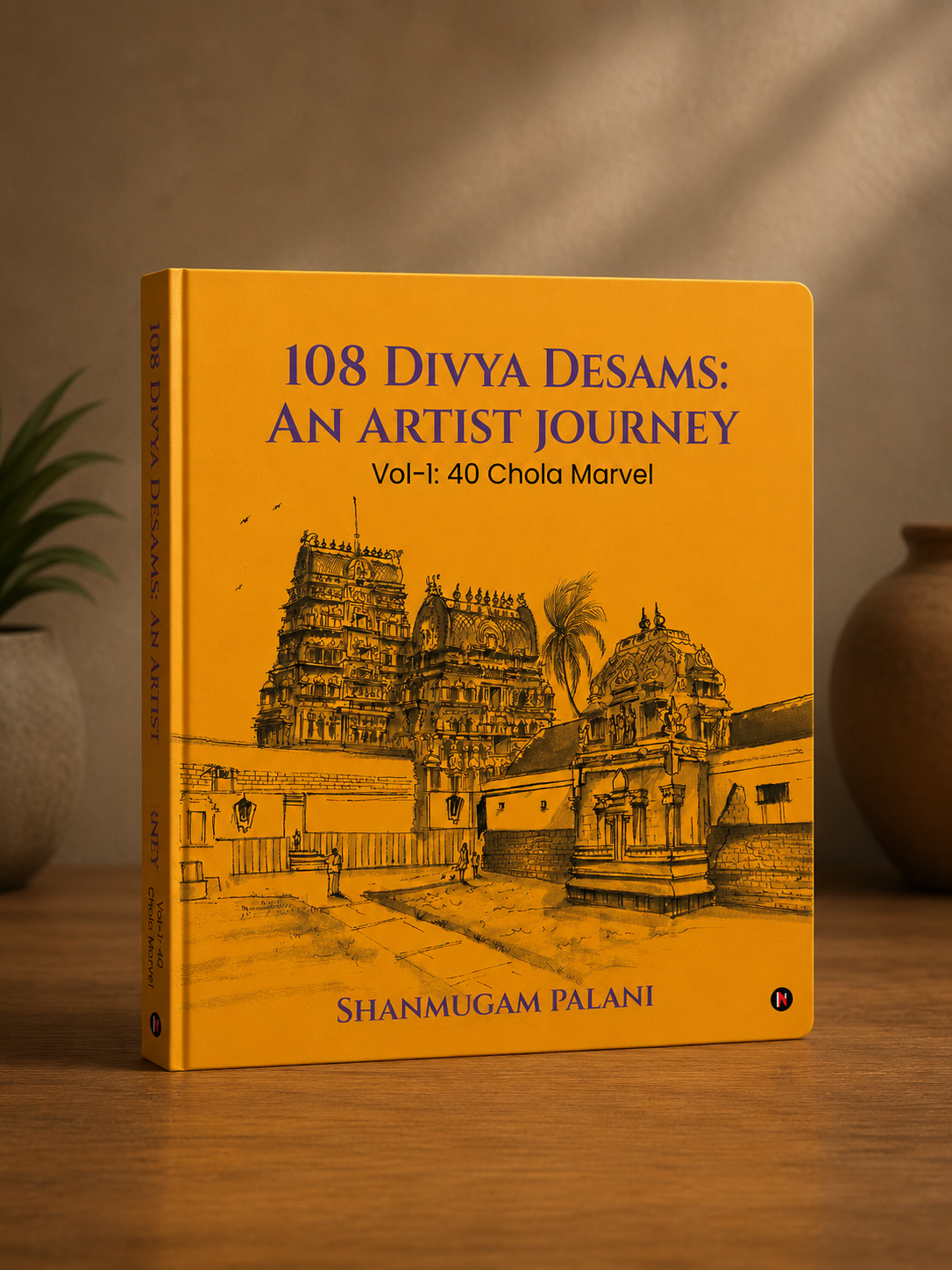
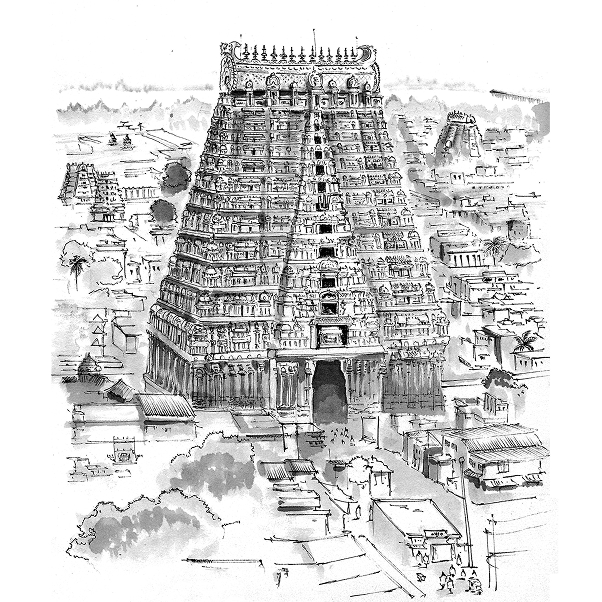
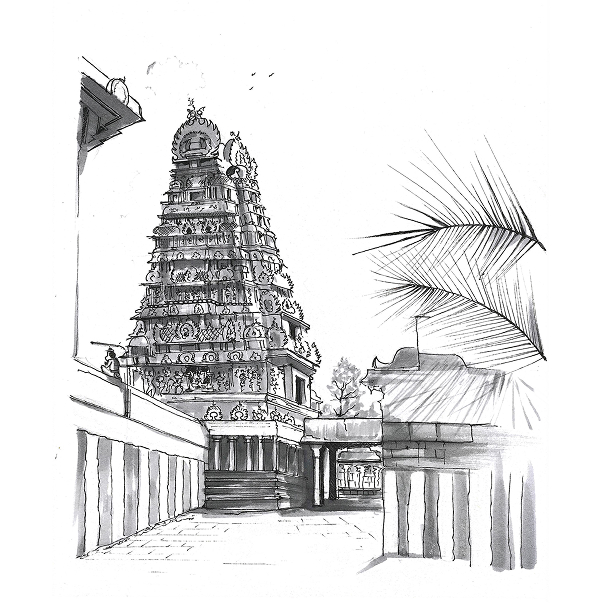
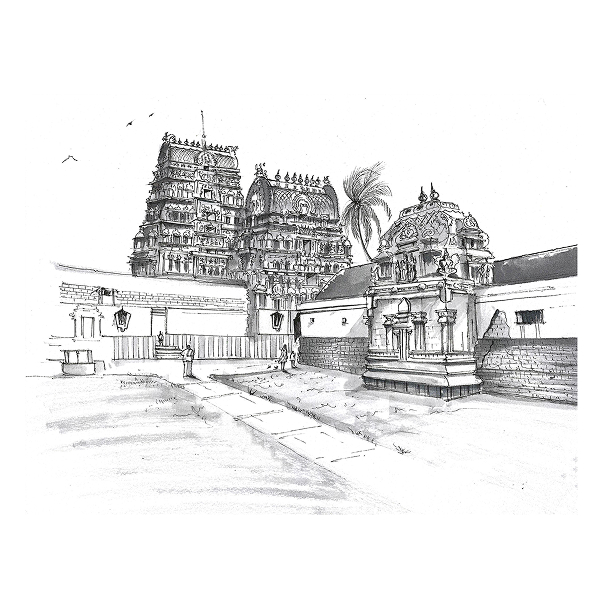
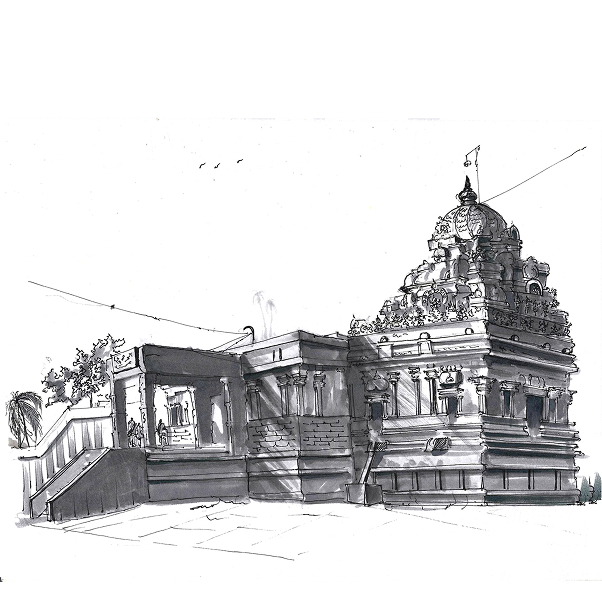
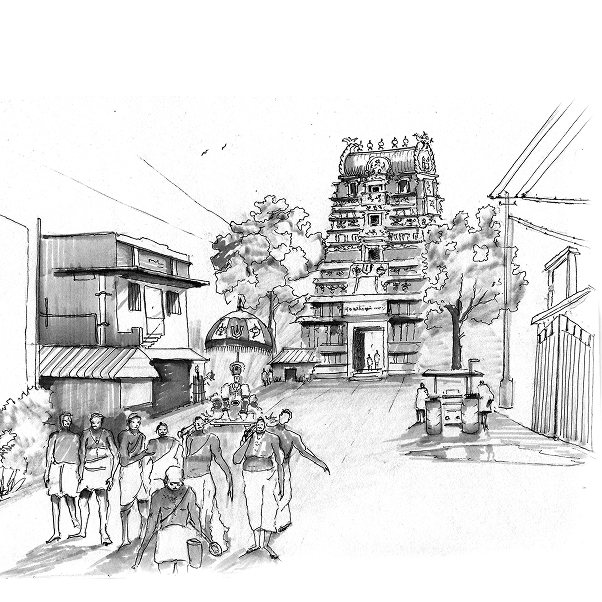
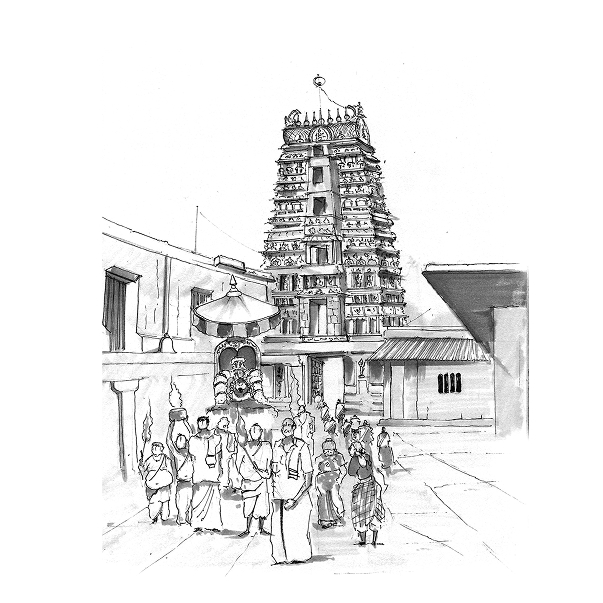
Over several years, I travelled across India to document all 108 Divya Desams — the sacred Vishnu temples that anchor much of South Indian religious history. What began as curiosity became a long-term commitment: recording oral histories, sketching architecture rarely drawn to scale, and writing down stories that exist mostly in memory before they disappear. It became a book — illustrated, researched, and written on my own. I don't mention this for the travel. I mention it because it's the clearest evidence of how I actually work: sitting with something complicated long enough to understand it properly, documenting it with care, and trusting that patience produces better outcomes than speed. It's the same instinct I rely on at a desk.
A few pages from the journey
If you're working on something with real complexity — an AI feature that needs to earn trust, a system stretched past its original design — I'd welcome the conversation. I'm always glad to compare notes with other designers, or hear from teams thinking hard about similar problems.